



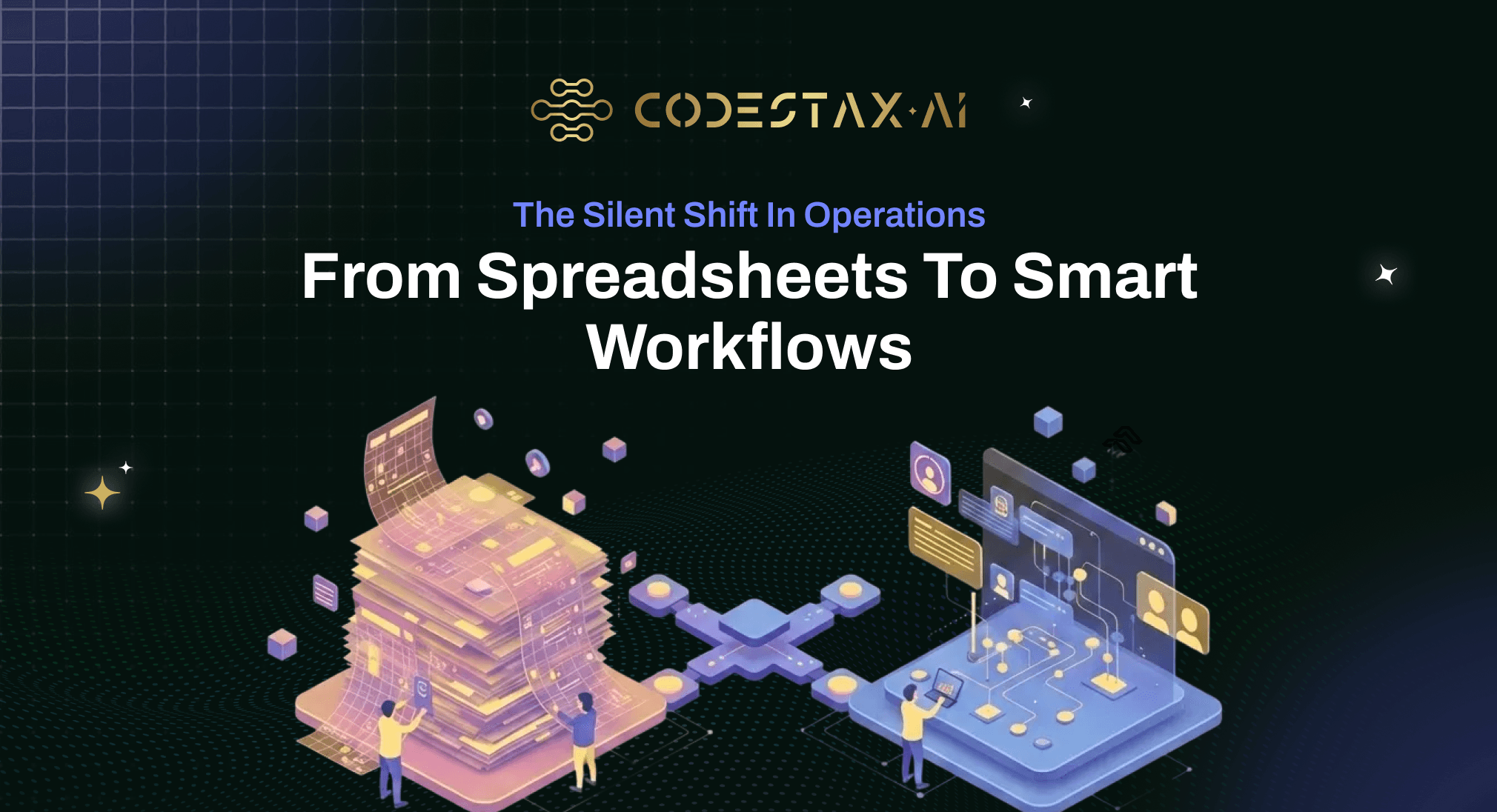
The Silent Shift in Operations: From Spreadsheets to Smart Workflows
Across industries, many business operations still rely on emails, spreadsheets, and manual approvals. At a smaller scale, this approach feels manageable. A request comes in by email, details are tracked in a spreadsheet, and approvals happen through follow-ups.
But as volumes grow, cracks begin to show. A finance team may lose track of which reimbursement requests are approved. An operations manager might spend hours chasing stakeholders for status updates. During audits, teams often scramble through email threads trying to reconstruct decisions made months earlier.
These challenges are not caused by people—they are symptoms of unstructured processes.
While working with workflow platforms, I’ve seen how shifting these same processes into structured workflows brings clarity, accountability, and speed—without adding operational overhead.
Designing Operations the Way We Design Products
Products are intentionally designed. Every user action leads to a defined outcome. Operations, on the other hand, often evolve informally.
Consider a simple employee onboarding process. In many organizations, HR sends an email, IT is looped in later, and facilities are informed only after delays. Each team tracks progress differently, often in their own spreadsheets.
When this process is designed as a workflow, every step becomes explicit: document collection, system access, approvals, and handovers. Ownership is clear, dependencies are visible, and nothing moves forward without completing the required steps.
Applying product thinking to operations transforms them from reactive coordination into predictable execution.
From Static Process Diagrams to Living Systems
Most teams document processes using SOPs or flowcharts. These documents explain what should happen—but not what is happening.
Take a loan approval process as an example. A flowchart might show submission, verification, approval, and disbursement. But it cannot tell you how many applications are currently stuck in verification or which approvals are overdue.
A smart workflow turns this into a living system. Each application has a real-time status, verification steps are automatically tracked, and approvals happen within the flow itself. Managers no longer need status meetings to understand progress—the workflow already provides that visibility.
This shift significantly reduces follow-ups and manual tracking.
Why Business Users Need to Build, Not Just Request, Workflows
One of the most common operational delays comes from dependency on technical teams. A finance team may want to add an additional approval for high-value payments. An operations team may need a new validation rule due to regulatory changes.
Traditionally, these changes become IT requests and wait in queues.
With no-code workflow platforms, business users can make these updates themselves. For example, a compliance team can add conditional approvals for transactions above a certain threshold without writing code. An HR team can update onboarding rules based on role or location within minutes.
This empowers teams to respond faster while maintaining governance.
Visibility Is a Built-In Feature, Not a Report
Organizations often rely on reports to understand operational performance. However, reports are retrospective and require manual effort.
In a well-designed workflow system, visibility is embedded. For example, a customer support workflow can instantly show how many tickets are pending approval, escalated, or resolved. A procurement workflow can highlight where purchase requests are slowing down and why.
Dashboards reflect real-time states, and reporting becomes an outcome of execution—not an additional task.
Small Workflow Changes, Large Operational Impact
The most impactful operational improvements are often small. Adding a validation rule in a reimbursement workflow can prevent incomplete submissions. Reordering steps in a service request flow can reduce turnaround time. Conditional logic can eliminate unnecessary approvals for low-risk requests.
For instance, in a non-PO invoice process, introducing automatic checks for invoice completeness can significantly reduce back-and-forth between finance and vendors.
These incremental changes compound over time, driving measurable efficiency gains.
No-Code Does Not Mean No Structure
A common misconception is that no-code platforms lead to unstructured processes. In reality, mature workflow platforms enforce structure through role-based access, validations, approval hierarchies, and audit trails.
For regulated industries such as banking or finance, this structure is critical. Every action is logged, approvals are traceable, and compliance requirements are built into the process itself.
The result is controlled flexibility—allowing teams to adapt without compromising governance.
Closing Thoughts
The transition from emails and spreadsheets to smart workflows is not simply a technology upgrade. It represents a shift in how organizations design and run operations.
When workflows are treated as products, operations become more transparent, efficient, and resilient. As organizations scale, this product-led approach to operations will no longer be optional—it will be essential.
How does your team currently track approvals, exceptions, and operational handoffs?