



Unveiling the Magic Behind Google’s PageRank Algorithm
Larry Page and Sergey Brin’s background and involvement
In the late 1990s, Stanford students Larry Page and Sergey Brin faced the chaotic expansion of the internet. They introduced PageRank, an algorithm that assigned importance to web pages based on incoming links. This innovation revolutionized search engines, considering the web’s interconnectedness rather than just keywords. PageRank became the backbone of Google’s ranking system, ushering in more relevant and trustworthy search results. The algorithm’s concept of evaluating relationships between pages transformed the internet’s organization and led to the powerful search engine we rely on today.
Chaotic expansion of the internet in the late 1990s
Yahoo Directory was an early web indexing and ranking system used by Yahoo before algorithmic search engines became dominant. It relied on human editors who manually reviewed and categorized websites into specific topics and subtopics. This curated directory helped users navigate the web by providing an organized structure of websites based on human judgment rather than automated algorithms.
Need for a more effective way to rank web pages
While the original PageRank algorithm involves iterative calculations, modern search engines use advanced optimization techniques, parallel processing, and distributed systems to handle massive amounts of data efficiently. The number of iterations or the stopping criteria for the iterations could be dynamically adjusted based on the scale of the web graph and other factors.
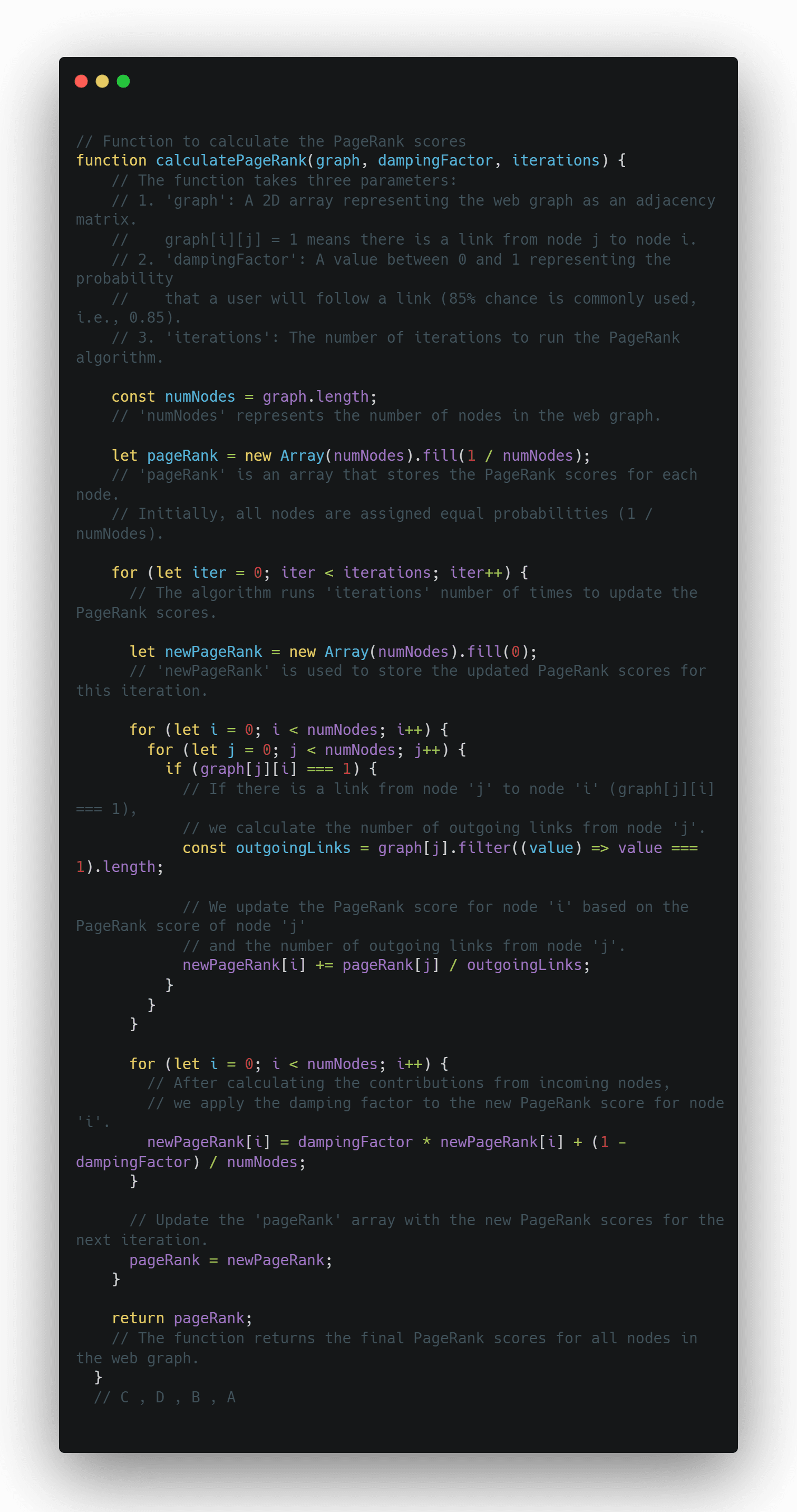
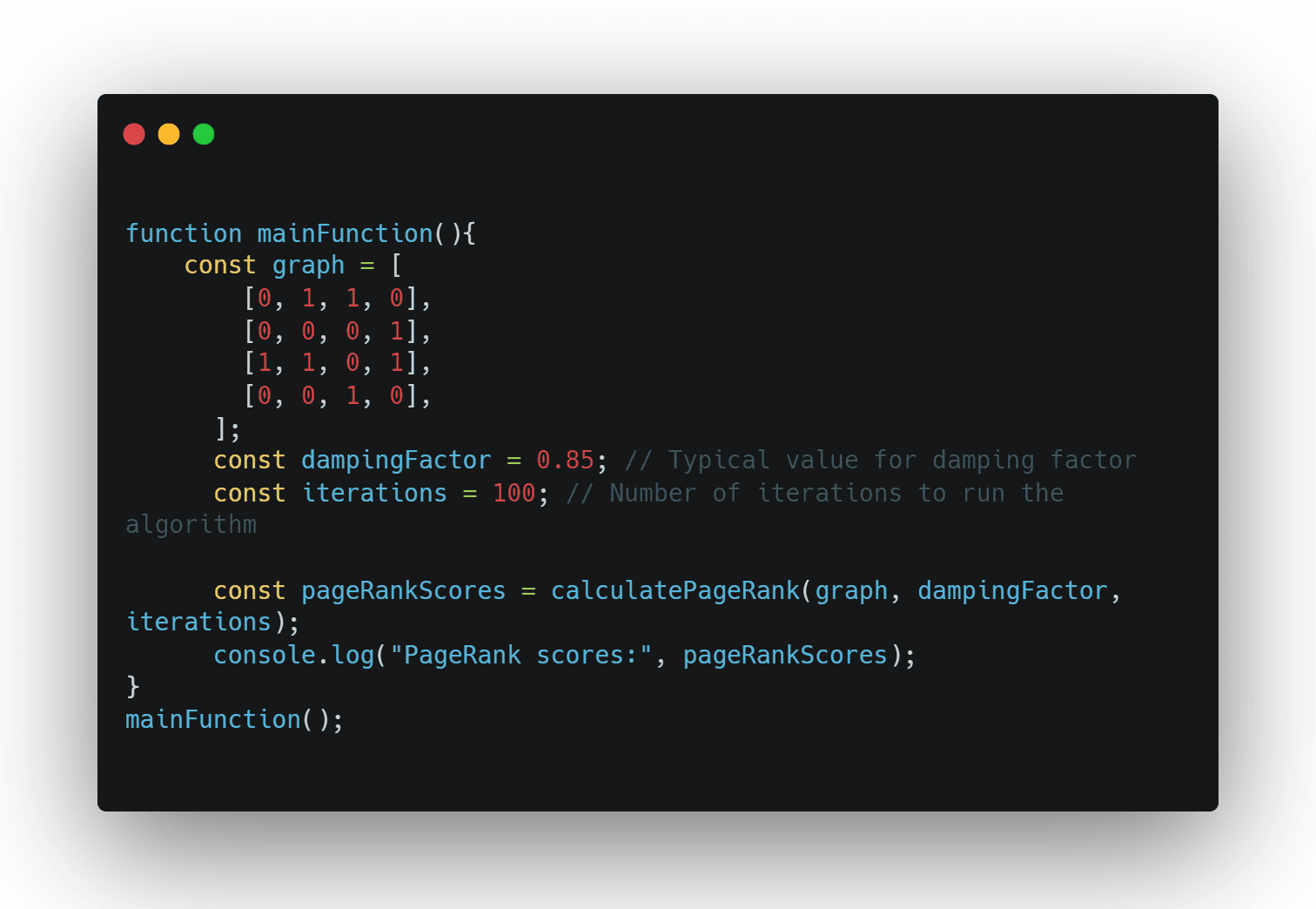
The “damping factor” in the PageRank algorithm is a parameter used to model the behavior of web surfers. It represents the probability that a user will continue browsing the web by following links instead of jumping to a new random page. The most common damping factor used in the PageRank algorithm is 0.85, which means that there is an 85% chance that a user will click on a link and a 15% chance of jumping to a random page.

Iterative Formula to find Page Rank
The damping factor prevents the PageRank algorithm from getting stuck in a loop or infinite traversal, as it ensures that there is a probability of moving from one node to another in the web graph.
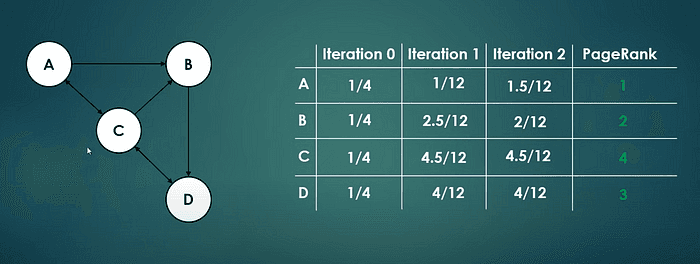
Result after iterations
Regarding the number of iterations, there is no fixed rule for deciding how many iterations to perform. The number of iterations required for the PageRank algorithm to converge on the stable scores can vary depending on the size and complexity of the web graph. In practice, it’s common to set a fixed number of iterations as a stopping criterion or use a threshold to check the convergence of the scores.