



“Mastering Asynchronous Magic: Promises and Timing in JavaScript”
Table of Contents
1. Adding Two Promises
2. Sleep Function
3. Timeout Cancellation
4. Interval Cancellation
5. Promise Time Limit
6. Cache with Time Limit
7. Debounce Function
8. Execute Asynchronous Functions in Parallel
Adding Two Promises
Function Explanation
This function takes two promises as input and returns a promise that resolves to the sum of their resolved values. This can be useful in scenarios where you need to combine results from two asynchronous operations.
Code
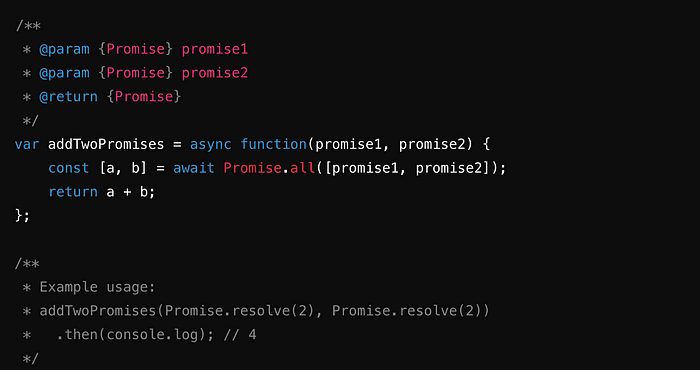
Real-World Scenario
Imagine you need to fetch two different pieces of data from two separate APIs and combine their results.
Sleep Function
Function Explanation
This function returns a promise that resolves after a specified number of milliseconds. This can be useful for delaying execution in an asynchronous function.
Code
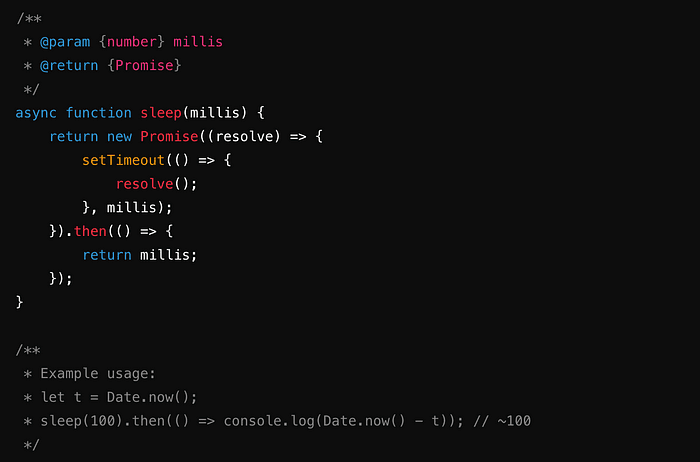
Real-World Scenario
You might use this to create a delay between retrying a failed network request or to implement debouncing in UI interactions.
Timeout Cancellation
Function Explanation
This function returns a cancellation function that can stop the planned execution and arranges another function to be called after a delay.
Code
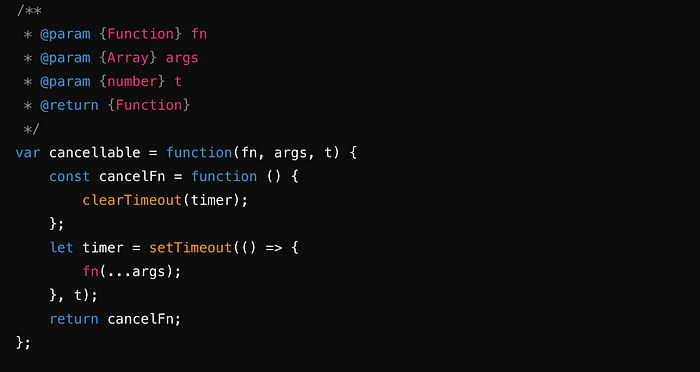
Real-World Scenario
If the user leaves the page before the API call finishes, you might use this to stop it.
Interval Cancellation
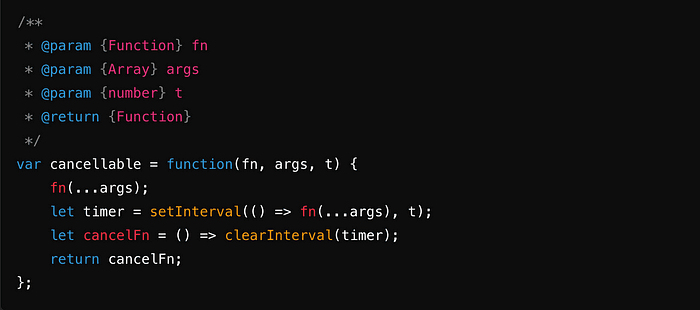
Function Explanation
This function repeatedly executes a function at a specified interval and returns a cancellation function to stop the repeated execution.
Code
Example Usage
Real-World Scenario
This can be used to recurrently retrieve data from an API and to cease retrieving it when it is no longer required.
Promise Time Limit
Function Explanation
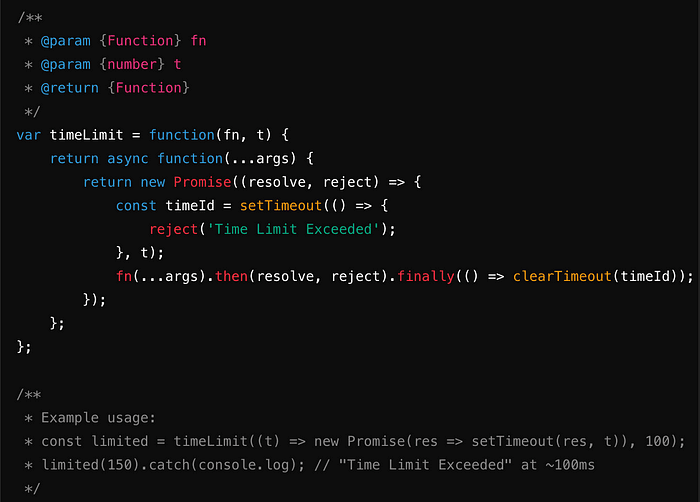
Another function with a time limit is wrapped by this one. The wrapped function rejects with a “Time Limit Exceeded” error if it takes longer than the allotted time to finish.
Code
Real-World Scenario
You might use this to enforce a timeout on network requests, ensuring they don’t hang indefinitely.
Cache with Time Limit
Function Explanation
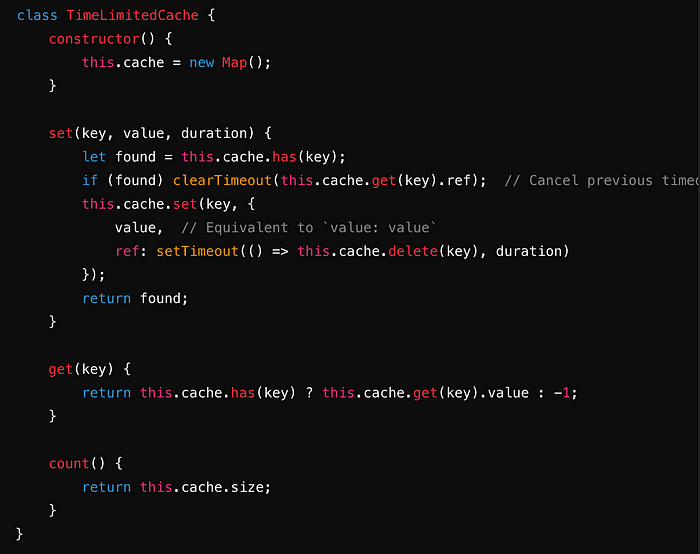
This class implements a time-limited cache, where each entry expires after a specified duration.
Code
Real-World Scenario
Use this to cache API responses for a short duration to reduce network requests and improve performance.
Debounce Function
Function Explanation
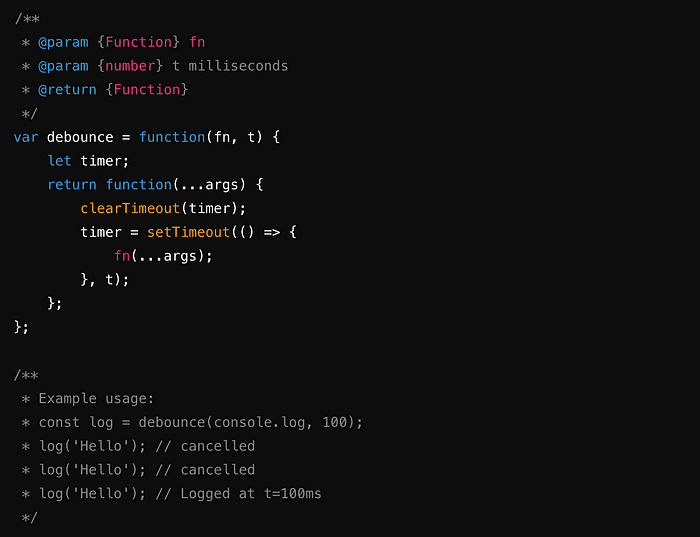
This function builds a debounced version of another function, delaying its execution until a predetermined amount of time has passed since its last call.
Code
Real-World Scenario
Debouncing is commonly used in search input fields to avoid making API calls on every keystroke but rather when the user stops typing.
Execute Asynchronous Functions in Parallel
Function Explanation
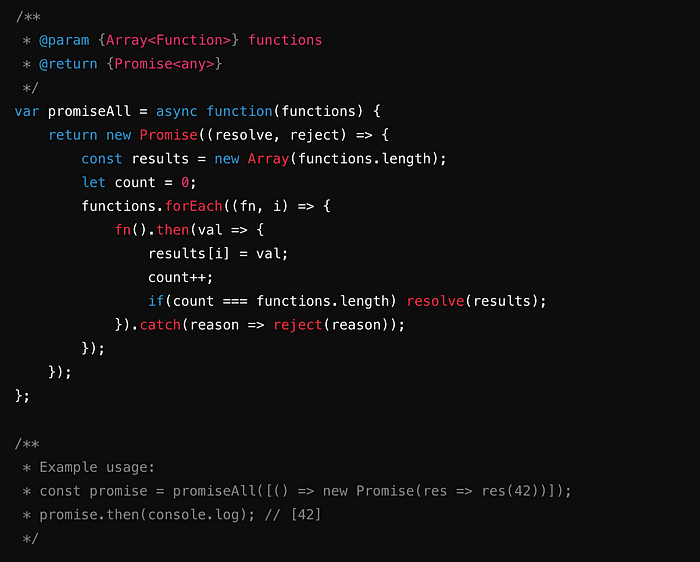
Upon receiving an array of asynchronous functions, this method resolves the promise when all the functions have finished or rejects it if any of the functions fail.
All of the resolved values of promises in the same order as they were in the functions should make up the resolved value of a promise. The promise should resolve when all the asynchronous functions in the array have completed execution in parallel.
Code
Real-World Scenario
You might use this to run multiple API calls in parallel and wait for all of them to complete before proceeding.