


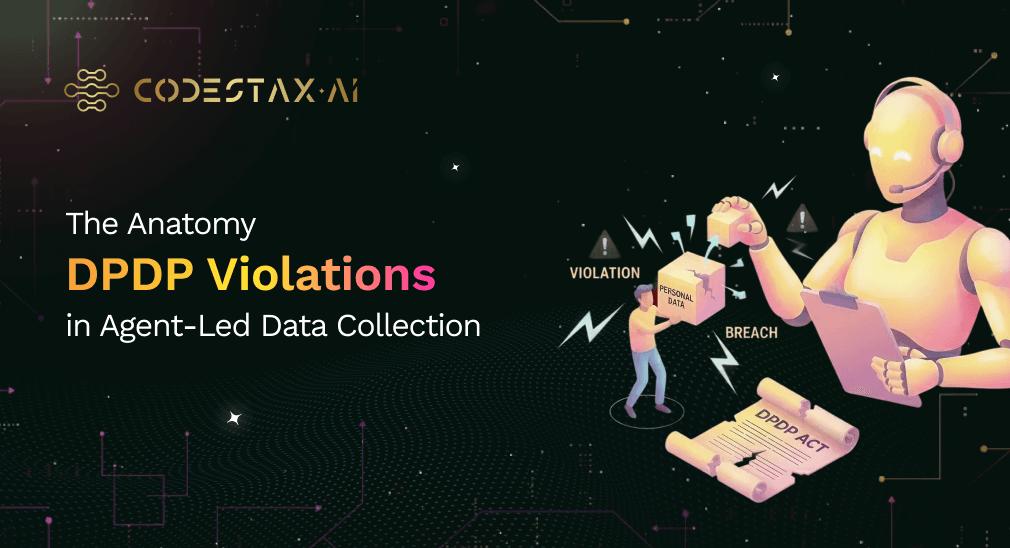
The Anatomy of DPDP Violations in Agent-Led Data Collection
The Digital Personal Data Protection (DPDP) Act, 2023, was notified in Nov’ 2025 with an expected 100% compliance by May 2027. As we have slowly started to get a grasp the act the common understanding that is getting developed is that its not only a mammoth undertaking but it will also require a cultural shift in how organizations are handling user data. DPD has shifted the landscape from "data as an asset" to "data as a liability" if not managed correctly. For organizations using field agents, feet-on-street, or third-party agencies, the risk of non-compliance is at its highest because the Data Fiduciary (the company) is held vicariously liable for the actions of its Data Processors (the agents).
This is an important distinction between the previous laws and the DPDP act. Now the organizations can not pass on the responsibility of non compliance on an intermediary / third party organization. This act makes the end company or Data Fiduciary liable for the violations. Unfortunately, most agent-led processes are currently riddled with "invisible" violations. Under DPDP, these can attract penalties of up to ₹250 crore.
Here is an analysis of the current gaps and a blueprint for a workflow-based solution for your article.
A. Non-Consensual "Shadow" Digitization
Agents often collect data in physical forms (paper forms) and later digitize them.
The Risk: The Act specifically covers non-digital data that is "digitized subsequently." If the agent captures a photo of an Aadhaar card on a personal phone before uploading it to a company portal, that "intermediate" digital copy is a violation.
B. Bundled or Vague Consent
Common practice involves agents telling customers, "Just sign here for the service."
The Violation: DPDP requires consent to be free, specific, informed, unconditional, and unambiguous. Pre-ticked boxes or "all-in-one" consent forms for marketing and service are now illegal.
C. The "Personal Device" Trap
Agents frequently use their personal WhatsApp or gallery to share customer documents with headquarters.
The Violation: This creates a Data Breach as per Section 2(u), which includes "unauthorized processing" or "accidental disclosure." Once data is on an agent's personal device, the Fiduciary has lost control, leading to potential unauthorized access.
D. Purpose Creep
An agent might collect a phone number for "delivery" but later use it for "personal follow-up" or "independent insurance leads."
The Violation: Purpose Limitation. Data can only be used for the exact reason mentioned in the notice given at the time of collection.
These violations may seem like an everyday story and may even come as a surprise to most of the readers. India where data privacy never took a front seat this law may even sound draconian but this law tries to bring us to globally accepted standards. A country which is centered around whatsapp forward for every communication shift may seem impossible at the moment. However, we do have workflow tools which can solve the issues easily.
Using Workflow Systems to Solve Compliance
To mitigate these risks, organizations must move away from "manual oversight" and toward Hardcoded Compliance via workflow systems and Standard Operating Procedures (SOPs).
Step 1: Integrated Consent Orchestration
Instead of a paper form, the workflow should trigger a Digital Notice in the customer's preferred language (as mandated by the Act).
The SOP: The agent’s app should not allow the "Upload" button to activate until the customer has interacted with a granular consent screen on their own device (via an OTP or a link sent to their phone).
Step 2: Containerized Data Capture (Anti-Leakage)
Workflow systems should use In-App Cameras rather than the phone’s native gallery.
The SOP: Images captured within the workflow must be encrypted at the point of capture and wiped from the device immediately after a successful upload to the central server. This prevents "shadow copies" in the agent's photo gallery.
Step 3: Automated Data Minimization
Traditional SOPs often ask for "full documents."
The Workflow Fix: Use standard government Aadhar APIs, instant face match and ID match algorithms to verify the user instantly against the standard practice of uploading the Aadhar documents, adhering to the Data Minimization principle.
Step 4: Time-Bound Deletion Workflows (The "Right to be Forgotten")
DPDP requires data to be deleted once the purpose is served.
The SOP: Every data entry in the workflow must have an "Expiry Tag" based on the business logic (e.g., 30 days after a lead is rejected). The system should automatically trigger a deletion workflow, ensuring the Fiduciary isn't holding "toxic" old data.
Its essential that the organizations start looking into the solutions which can provide them with compliance assurance. At CodeStax.AI we have created a workflow system (FlowStax) essentially designed to handle the high volume banking workflows. Reach out and we can initiate the discussion on how we can help you get complied in the next 18 months.